
Anktiva, Immunotherapy, and Cancer News: What the FDA Warning Really Means
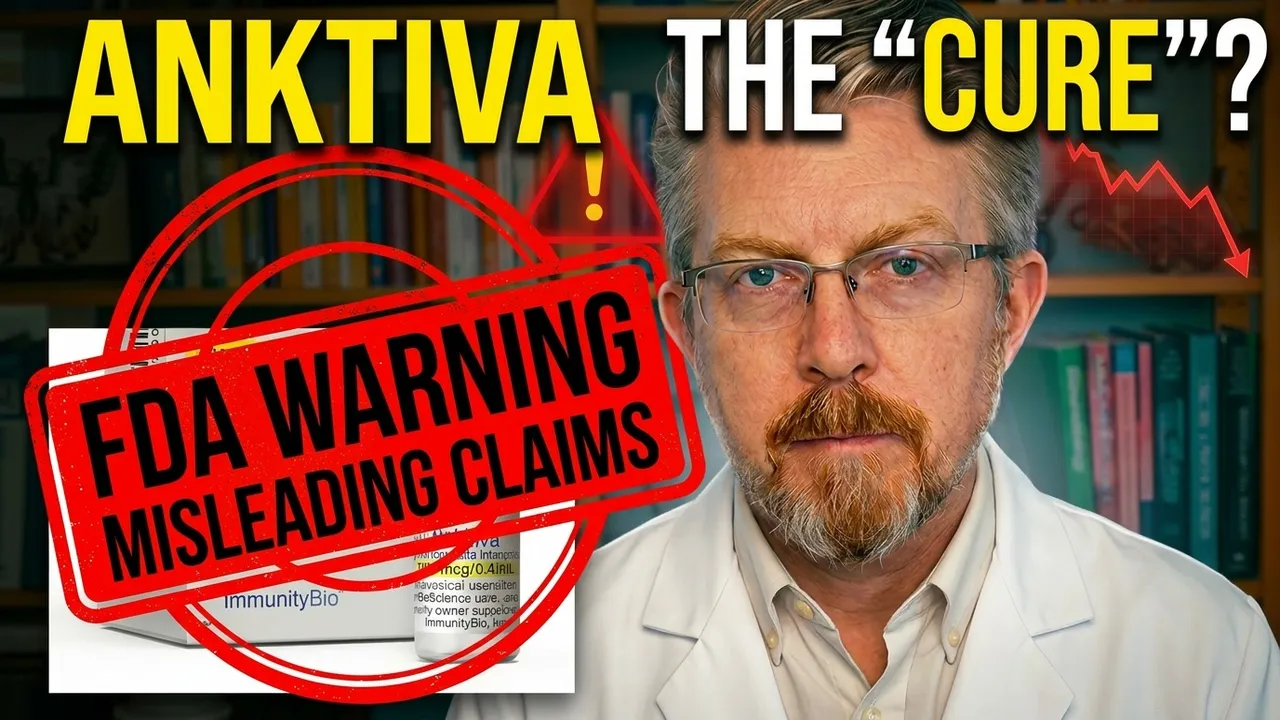
Recent news around Anktiva, immunotherapy, and cancer treatment claims has raised serious concerns across oncology. A warning from regulators regarding claims made by Patrick Soon-Shiong and ImmunityBio highlights an important issue for every cancer patient: the gap between marketing, especially on social media and podcasts, and actual clinical data.
Anktiva is being promoted as a breakthrough in immunotherapy for cancer, including claims of curing all cancer types by itself to acting as a cancer vaccine. These claims have spread widely across media, including NewsNation coverage and the Sean Spicer Show. But when you look at the biology and clinical trials, the story becomes much more nuanced.
How Anktiva Actually Works in Immunotherapy for Cancer
Anktiva is based on IL-15 biology, designed to stimulate natural killer (NK) cells. In cancer treatment, NK cells can attack tumor cells—but only under specific conditions.
For Anktiva to work, tumors need to have low or absent HLA class I expression. No cancers, including breast cancer, colorectal cancer, colon cancer, and lung cancer, consistently meet this requirement. Many individual cases will, bit not all. Additionally, if a tumor expresses PD-L1, NK cells will be suppressed unless Anktiva is combined with checkpoint inhibitors.
There is no evidence that Anktiva works across all cancer types, including ovarian cancer, GBM, non-Hodgkin’s lymphoma, or advanced tumor settings. Cancer biology is highly specific, and no therapy works universally across all cancers. This means Anktiva is not a universal cancer cure as claimed. It is a targeted immunotherapy that may work in specific biological contexts, often alongside other treatments like chemotherapy or checkpoint inhibitors.
Clinical Trials vs Marketing Claims
The biggest disconnect comes from clinical trials.
In bladder cancer, Anktiva showed benefit only when combined with other therapies. As a standalone treatment, the trial arm was stopped early due to lack of efficacy. This directly contradicts claims that a single dose of Anktiva by itself can cure cancer.
Is Anktiva a Cancer Vaccine?
Another claim is that Anktiva acts like a vaccine, preventing cancer recurrence, or can prevent cancer fro developing if taken before.
This is not supported by immunology. Vaccines rely on long-term T-cell memory. Anktiva primarily activates NK cells, which are short-lived and require repeated dosing. Clinical trial data confirms this, with dosing required every one to three weeks.
There is no durable immune memory, meaning it cannot function as a preventive cancer vaccine.
What This Means for Cancer Patients
For cancer patients navigating chemotherapy, immunotherapy, and evolving oncology treatments, this situation reinforces a critical point: always evaluate data, not headlines.
Anktiva may have a role in cancer treatment, particularly in combination therapy and with proper patient selection. But it is not a cure-all.
The FDA warning is not about suppressing innovation or protecting big pharma. It is about ensuring that cancer treatment claims match clinical evidence.
Understanding the biology behind treatments—whether for breast cancer, colorectal cancer, or other tumor types—helps prevent wasted time, false hope, and unnecessary risk.
The goal is not to dismiss new therapies, but to use them correctly, based on real data.
Accurate science saves lives — and it starts with rejecting simple myths in favor of real understanding. Stay curious.
Disclaimer: This content is for educational purposes only and is not medical advice. It does not replace guidance from your healthcare provider. Cancer and treatment decisions are highly individual—always consult your physician or qualified healthcare professional regarding your specific situation.
A full disclaimer is available Terms and Conditions.
Have you beed following RK-33 DDX3 INHIBITORS? John Hopkins?
No, he hadn’t heard of this, but will look into it now. Thanks for the headsup. What do you think of it?
I wouldn’t trust the FDA as far as I can throw them, they showed their true colors! They only back something when their pockets are lined, just like Congress!!!
That perspective really isn’t supported by evidence. Neither the FDA nor “big pharma” are driving access issues, the insurance industry is. We talked about that in this episode: https://youtu.be/KlIbJIEL-UU