

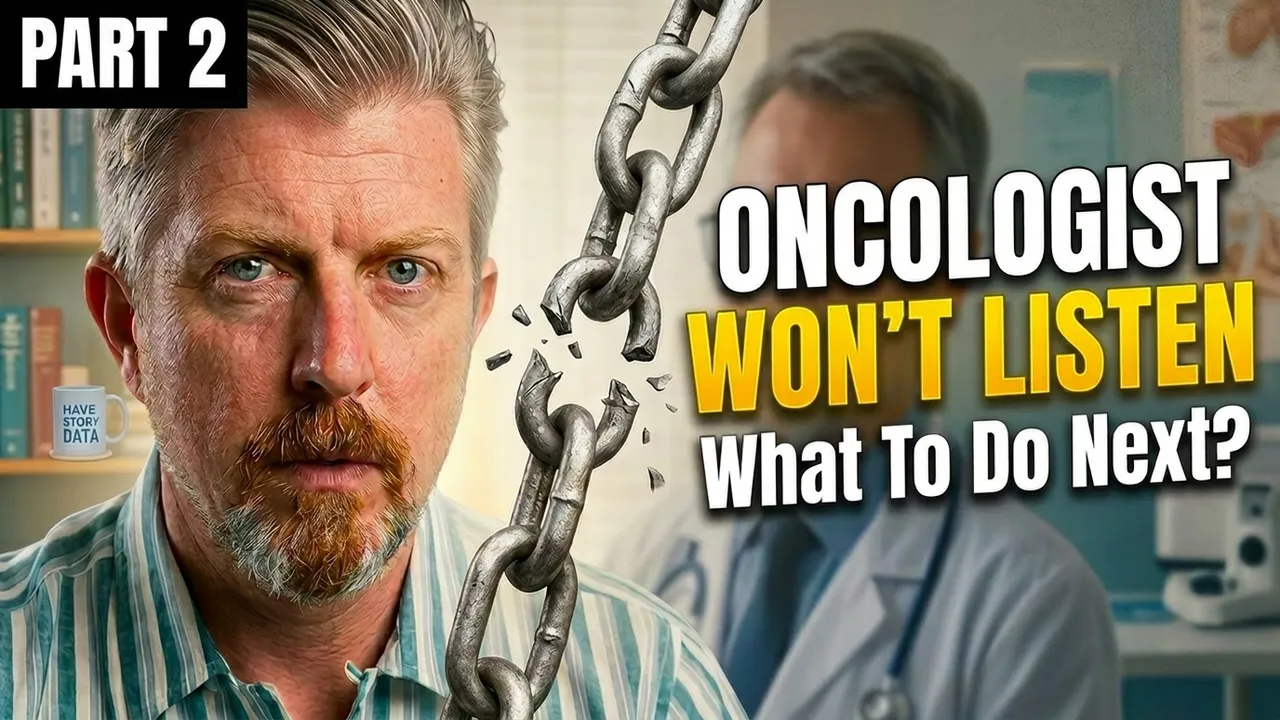
When Your Oncologist Isn't Listening: What To Do Next
If you keep raising the same concern with your oncologist and getting the same dismissal, the problem is no longer that conversation — it's the partnership. A broken or unsupportive cancer doctor relationship can quietly derail your entire cancer treatment plan, because your oncologist is the gateway to every heavy-hitting option in cancer care.
The Difference Between an Instance and a Pattern
In Crucial Conversations, Joseph Grenny describes three levels of difficult conversations: the instance or Content, the Pattern, and the Relationship. CPR. Most cancer patients only address the instance — one denied request, one missed concern. But when the same issue keeps surfacing, that's a pattern. If you only solve the instance, the pattern keeps driving a wedge into the relationship until trust collapses entirely. Think of the pattern level like a check engine light. Fix it when the light comes on, not when the engine is smoking.
A Written Letter of Justification for Denial
If your oncologist refuses to prescribe a drug you clearly qualify for, you have the right to request a formal written letter explaining the denial. Make sure the request is logged in MyChart, Epic, or whatever charting system your cancer center uses, so there is a record - this is a key step.
The phrasing matters: "I qualify for drug X. You are declining to prescribe drug X. I am requesting a formal written letter explaining the justification for that denial."
This shifts the encounter from a casual conversation to a documented medical decision. In many cases, the oncologist reconsiders. In other cases, it may end the partnership — go in with eyes open.
A Patient Advocate or Hospital Ombudsman
Every hospital and cancer center that accepts Medicare or Medicaid is required to have a patient advocate, patient representative, or ombudsman. They are not doctors. They sit in risk management. Critically, they answer to the hospital, not to your oncologist or department.
You can go directly to them: "I've been requesting X. My oncologist has repeatedly refused. I'm concerned about my standard of care. How do we move forward?" Their job is to find a path forward. They are the on-field referee, and you are allowed to flag one down.
When It's Time to Move On
If the partnership is unsalvageable, your insurance can identify other local oncologists or telehealth options. Infusions can usually be done at home through traveling infusion clinics — insurance often prefers this because it costs them less than hospital overhead. One caveat: the first dose of any immunotherapy should always happen in a hospital setting because of cytokine release syndrome risk. After that, home infusion becomes a reasonable option.
The Bottom Line
A broken oncologist relationship will limit your access to the treatments that matter most. You don't have to stay stuck. Document, escalate through formal channels, or move on. Your cancer treatment depends on it.
Accurate science saves lives — and it starts with rejecting simple myths in favor of real understanding. Stay curious.
Disclaimer: This content is for educational purposes only and is not medical advice. It does not replace guidance from your healthcare provider. Cancer and treatment decisions are highly individual—always consult your physician or qualified healthcare professional regarding your specific situation.
A full disclaimer is available Terms and Conditions.