
Turbo Cancer, COVID Vaccines & What Cancer Biology Actually Shows
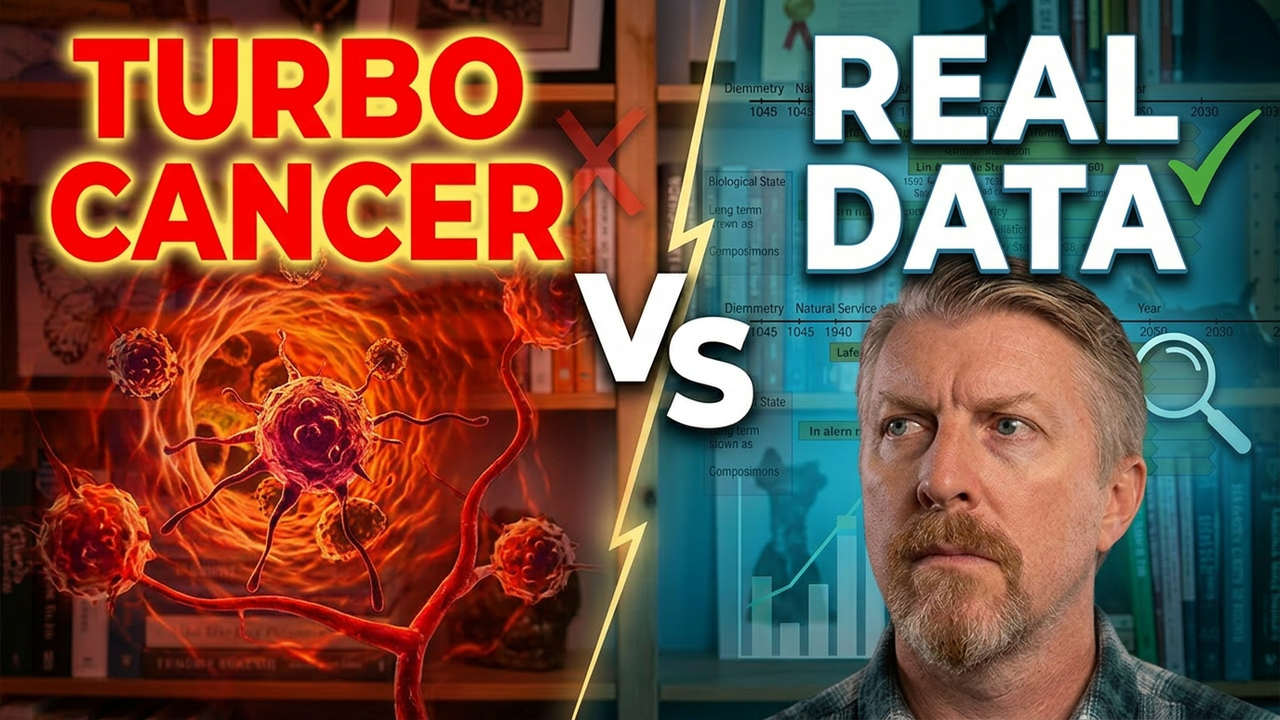
If you are worried about cancer, have cancer, or someone you love does, you have probably seen the phrase "turbo cancer" on social media. The claim is that mRNA COVID vaccines are causing cancers to appear within weeks or even a day of a shot - in one case it is claimed that a vaccine dose caused cancer the very next day. It is one of the most widely shared cancer myths online right now, and it is reaching cancer patients who are already scared. But what is cancer, really — and what does cancer biology actually tell us about how fast a tumor can develop? The answer comes from 80 years of atomic bomb survivor data, and it is definitive.
Hiroshima, Nagasaki & the Biological Floor for Cancer Development
In August of 1945, atomic bombs were dropped on Hiroshima and Nagasaki. Roughly 280,000 survivors were exposed to massive doses of ionizing radiation. A dedicated research institution tracked every one of these survivors for nearly 80 years, reviewing every death certificate and maintaining a loss-to-follow-up rate of just 0.07%.
This is both the longest-running and largest radiation epidemiology study in the world. And it gives us the most important number in this conversation: the fastest cancer ever documented after that massive level of radiation exposure was a little over two years. That was leukemia — the most radiosensitive cancer there is. Solid tumors like breast cancer, lung cancer, colon cancer, and skin cancers did not even begin to increase until ten years after the atomic blast. That two-year floor, after catastrophic radiation exposure, is the biological baseline for how fast any tumor can possibly develop.
What mRNA Vaccines Actually Do — and Don't Do
An mRNA vaccine delivers a short genetic instruction, causes your cells to briefly produce a protein, mounts an immune response against it, and then clears out. The mRNA degrades rapidly. The main biological effect is a temporary burst of inflammation.
On the other hand, radiation from an atomic bomb randomly breaks DNA throughout your entire body. An mRNA vaccine can not damage DNA. It does not cause the genomic instability that drives cancer initiation. And it certainly can not do so faster than the fastest mechanism ever documented in human history. The biology does not support a tumor developing in days or weeks from a vaccine under any circumstances — in any cancer, including leukemia, lymphoma, prostate cancer, or any other cancer type.
Why Cancers Are Being Discovered — Not Caused — After Vaccination
People who go to a doctor to get a vaccine are actively receiving healthcare. They are being seen by clinicians, having conversations, getting referred for follow-up including PET scans and imaging. Cancers that were already silently developing are being discovered earlier.
People who avoid vaccinations tend to avoid healthcare as well and get their cancers diagnosed later, when symptoms finally force them to seek care. By then the tumor may have been growing for years or decades. This is called surveillance bias, and it is the most likely explanation for the pattern people are seeing online. It is a change in detection, not a change in causation. You can see that in the graphs, they have the same rate of cancer diagnoses, just a delay for the unvaccinated group. It is not a cause of cancer. It is earlier cancer care.
Practical Takeaway: The Timeline Tells You Everything
Cancer risk factors are real, and cancer research continues to identify them. But the turbo cancer timeline — days or weeks from a vaccine to a diagnosis — is biologically impossible. The cause of most cancers is a combination of replication errors and time. The tumor you are treating today likely has its origins in a cellular event from decades ago. When you see a frightening claim about cancer online, ask one question: does the proposed timeline match what we know about cancer biology? In this case, it does not, by a wide margin. What matters is what you do with the treatment options in front of you right now.
Accurate science saves lives — and it starts with rejecting simple myths in favor of real understanding. Stay curious.
Disclaimer: This content is for educational purposes only and is not medical advice. It does not replace guidance from your healthcare provider. Cancer and treatment decisions are highly individual—always consult your physician or qualified healthcare professional regarding your specific situation.
A full disclaimer is available Terms and Conditions.