


Chemo Timing, Neuropathy, & Side Effects: The Chronotherapy Science Your Oncologist Never Mentioned
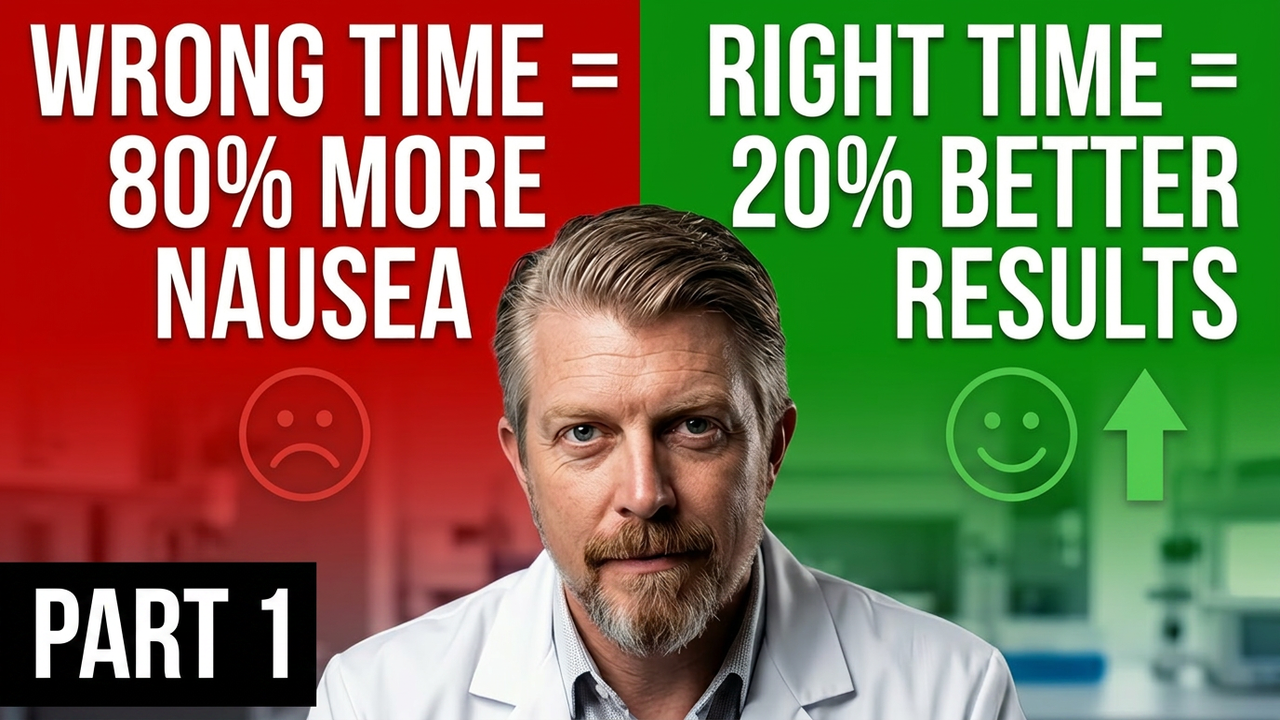
If you are on chemotherapy for breast cancer, colon cancer, colorectal cancer, lung cancer, or any cancer treated with platinum drugs or fluoropyrimidines, there is a variable in your treatment that almost nobody discusses. It costs nothing. It requires no new prescription. It has been studied in more than 50 randomized clinical trials. And it has been shown to reduce nausea and diarrhea by up to 80%, cut peripheral neuropathy risk by roughly 50%, and improve efficacy by more than 20%. It is called chronotherapy — and it is simply the science of when you take your chemo.
Why Your Body Clock Controls Chemotherapy Side Effects
Every cell in your body runs on a molecular clock cycling through almost exactly 24 hours. That clock controls approximately 10% of all your genes — including genes directly involved in how chemotherapy works.
Three biological rhythms matter here. First, the liver enzymes that break down chemotherapy drugs follows a circadian rhythm, meaning the same dose at different times produces different blood concentrations and different toxicities. Second, your healthy cells repair chemo-induced DNA damage most efficiently at certain times of day — and tumor cells with broken clocks cannot keep up. Third, normal cells divide on a predictable schedule. Timing treatment to avoid peak healthy cell division protects your tissue and reduces chemo side effects.
Morning Drugs vs Afternoon Drugs: What the Data Shows
Fluoropyrimidines — 5-fluorouracil and oral capecitabine — are morning drugs. Their optimal window is between 4 AM and 10 AM. The enzyme that clears 5-FU is at its lowest activity in the early morning, meaning the drug stays active longer. Healthy gut and bone marrow cells are not dividing and also are simultaneously in repair mode. Clinical trials show up to 80% reduction in nausea and diarrhea and roughly 50% less neuropathy with early morning dosing for 5-FU.
If you take oral capecitabine, this is immediately actionable — you control when you take it.
Platinum drugs — cisplatin, carboplatin, and oxaliplatin — are afternoon to evening drugs. DNA repair enzymes in healthy cells are most active in the afternoon, meaning your body handles the collateral damage better when dosed later. Tumor cells with disrupted clocks cannot do the same.
This matters enormously for FOLFOX, which combines oxaliplatin with 5-FU. One is a morning drug, one is an afternoon drug. Giving both at the same time cancels out the chronotherapy benefit. The optimal approach — chronomodulated FOLFOX — separates them deliberately and uses them specifically when they benefit you the most.
Practical Takeaway: One Question to Ask at Your Next Appointment
You do not need to become an expert in circadian biology. You just need to ask: is there data on optimal timing for the drugs in my regimen, and is there any flexibility in when I receive them?
For oral drugs, you already have control. For infused chemotherapy, ask about adjusted scheduling or programmable pump availability. There is no downside to asking — and potentially a very large upside. Forty years of peer-reviewed science supports this conversation. It just has not made it into your infusion suite yet.
Accurate science saves lives — and it starts with rejecting simple myths in favor of real understanding. Stay curious.
Disclaimer: This content is for educational purposes only and is not medical advice. It does not replace guidance from your healthcare provider. Cancer and treatment decisions are highly individual—always consult your physician or qualified healthcare professional regarding your specific situation.
A full disclaimer is available Terms and Conditions.
Are there recommendations for Enhertu ?
Definitely, glutamine helps with GI distress and apigenin helps with reducing the offtarget effects of the chemotherapy payload. Since the actaul drug delivered is a topoisomerase I inhibitor similar to irinotecan, try to scehdule your infusions for the late afternoon if possible.