

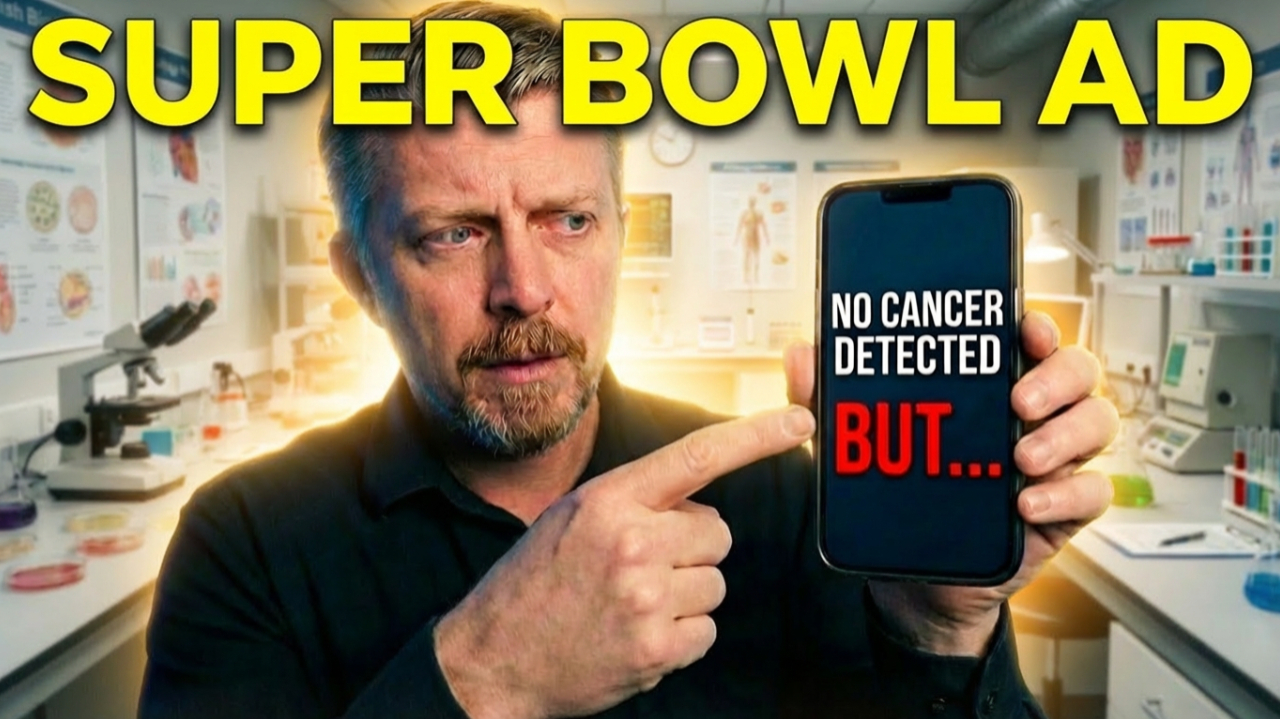
The Galleri Test for Cancer: Powerful Tool or False Reassurance?
After the Super Bowl ad sparked interest in multi cancer early detection, many people began asking about the Galleri test for cancer. Marketed as an MCED (multi cancer early detection) blood test, the Galleri test uses liquid biopsy technology to look for circulating tumor DNA (ctDNA) in the bloodstream. Developed by Grail, a company spun out of Illumina, this genomic testing platform represents a major step forward in cancer detection. But as with any cancer screening test, the numbers matter - a lot.
How the Galleri Liquid Biopsy Works
The Galleri test analyzes fragments of ctDNA shed from tumors into the bloodstream. Different cancers — including biliary cancer, colorectal cancer, breast cancer, pancreatic cancer, lung cancer, and others — leave distinct molecular signatures. Through molecular profiling, the test attempts to identify not only whether cancer is present but also where it may have originated from.
From a technology standpoint, this is impressive. Liquid biopsy cancer detection has been a long-standing goal in oncology, particularly for cancers like pancreatic cancer, where traditional screening is limited and most cancers are asymptomatic.
The Strength: Extremely Low False Positives
One of the Galleri test’s strongest features is its low false positive rate — about 0.4 percent. If the test detects cancer, it is very likely real. More than 80 percent of the time, it correctly identifies the tissue of origin, allowing physicians to focus follow-up imaging and diagnostics appropriately.
For cancers without established screening — such as pancreatic cancer — this breadth of detection is very meaningful.
The Big Weakness: High False Negatives in Early Cancer Detection
Here is where the marketing becomes problematic.
Overall, the test misses about 48 percent of cancers. That means nearly half of existing cancers are not detected.
Stage matters significantly. At stage IV, detection approaches 90 percent - which is great. At stage III, around 77 percent are detected. But for stage II, detection drops dramatically to 40 percent. For stage I cancers, the false negative rate exceeds 80 percent - meaning only 16% are detected. Fewer than one in five.
This means the test performs best when tumor burden is high — not necessarily at the earliest stages when intervention is most curative - and where they are focusing their marketing.
What the Galleri Test Is — and Is Not
The Galleri test is not FDA approved, though it is CLIA certified. It costs about $950 out of pocket and is not covered by insurance.
It can not replace established cancer screening for colon cancer, breast cancer, prostate cancer, or cervical cancer. Those remain far more sensitive for early-stage disease.
Instead, the Galleri test may serve as an adjunct — particularly for cancers without routine screening options.
The Bottom Line
If positive, the Galleri test is highly actionable. If negative, it should not provide reassurance or replace recommended screening.
In cancer screening and cancer treatment decisions, understanding both strengths and limitations is essential. Early detection remains powerful — but no single test replaces thoughtful, layered screening strategies.
Accurate science saves lives — and it starts with rejecting simple myths in favor of real understanding. Stay curious.
Disclaimer: This content is for educational purposes only and is not medical advice. It does not replace guidance from your healthcare provider. Cancer and treatment decisions are highly individual—always consult your physician or qualified healthcare professional regarding your specific situation.
A full disclaimer is available Terms and Conditions.