
Clomipramine for Cancer? What the Biology Actually Shows
If you’re a patient following cancer news, you may have seen claims on Facebook that an old antidepressant — clomipramine (Anafranil) — kills tumors. The story sounds compelling: a cheap, FDA-approved drug, real oncology research, and a known cancer protein target. For anyone exploring repurposed drugs for cancer or alternative treatments, that’s hard to ignore. But before adding antidepressants to your cancer therapy, we need to ask a simple question: does this actually work in the human body?
The NEDD4 Target in Cancer Treatment
The excitement comes from research on a protein called NEDD4. Many cancers — including breast cancer, lung cancer, prostate cancer, colorectal cancer, and melanoma — show increased NEDD4 activity. In theory, suppressing it could slow tumor growth.
A Spanish research group found that a breakdown product of clomipramine suppressed NEDD4 in cell culture. That’s where the headlines started. Facebook skipped the difficult steps of drug development and landed on: “Old antidepressant cures cancer.”
But science explained properly looks a little... different.
The Dosage Problem in Drug Repurposing
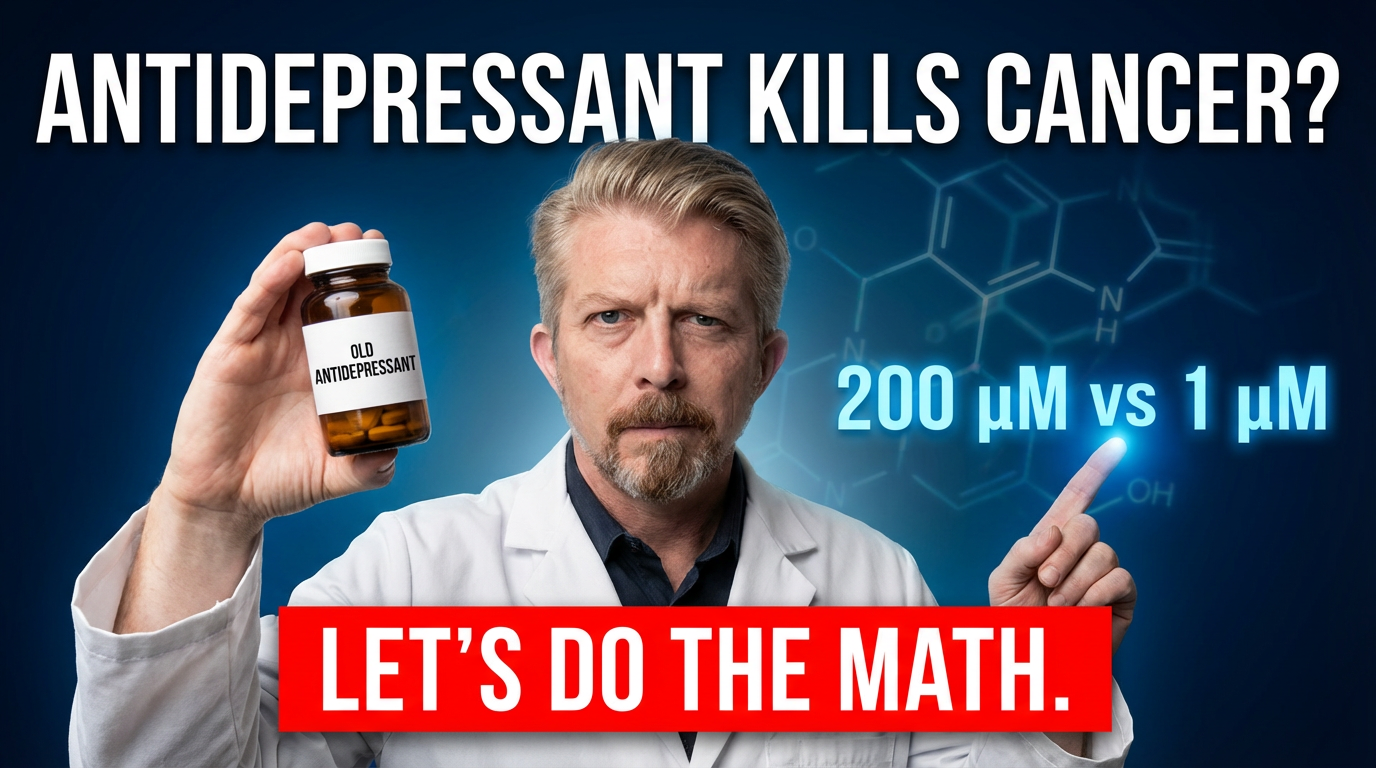
Clomipramine itself does not block NEDD4. Its metabolite (or breakdown product), norclomipramine, does. In laboratory experiments, cancer cells required concentrations of roughly 200 micromolar to cause meaningful suppression.
Patients taking the highest safe psychiatric doses only reach about 1 micromolar in the bloodstream.
That’s roughly one-two-hundredth of the concentration required.
Even before discussing clomipramine side effects — including cardiac rhythm issues, seizures, confusion, and serious neurological toxicity — the math alone ends the conversation. You cannot reach anti-cancer levels in humans, even by taking unsafe amounts of clomipramine. It just doesn't work.
This is the critical distinction between cell culture success and real oncology treatment.
Not All Cancers Respond the Same Way
Here’s another overlooked detail: not all tumors overexpress NEDD4. Pancreatic cancer and neuroblastoma cancer can actually downregulate (or suppress) it. Suppressing NEDD4 in those cancers could accelerate progression.
This is why one-size-fits-all cancer cure claims are dangerous. Mutation status matters. Tumor biology matters. Context always matters.
What the Researchers Actually Did
Importantly, the original scientists did not recommend taking clomipramine for cancer. They used it as a tool compound and figured out WHY it bound NEDD4. Then they began modifying its structure to create better, more selective anti-cancer drugs.
Those redesigned molecules are still in early preclinical development. They are not approved. They are not tested in humans, they are still in screening. Most such drugs fail before reaching patients.
The Bottom Line
Clomipramine is promising as a starting point for drug repurposing and drug design research. It is not a cancer treatment in its current form.
Taking a drug that cannot reach therapeutic levels — while exposing yourself to serious toxicity — is not a good tradeoff.
In cancer treatment and complementary alternative medicine discussions, biology wins over headlines every time.
Accurate science saves lives — and it starts with rejecting simple myths in favor of real understanding. Stay curious.
Disclaimer: This content is for educational purposes only and is not medical advice. It does not replace guidance from your healthcare provider. Cancer and treatment decisions are highly individual—always consult your physician or qualified healthcare professional regarding your specific situation.
A full disclaimer is available Terms and Conditions.