
What Cancer Patients Get Wrong About Supplements, Chemo Side Effects, and Immunotherapy
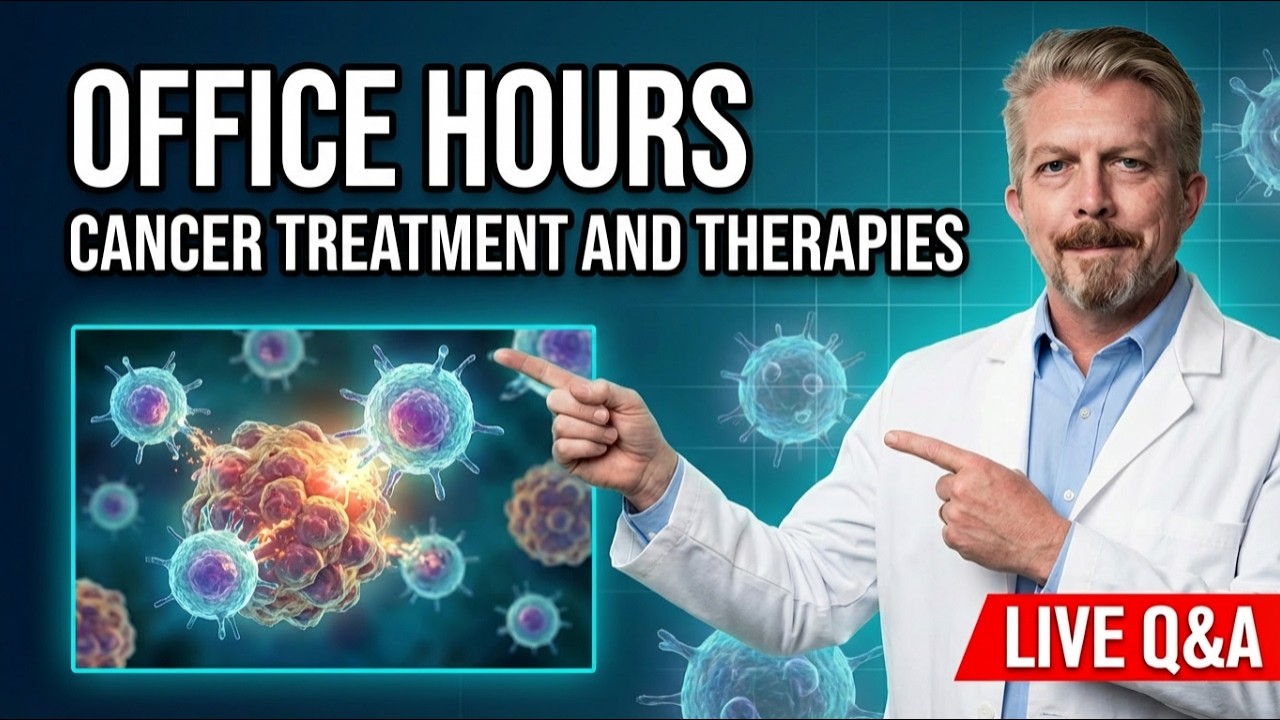
Most cancer patients spend hours researching supplements, diets, and forums at 2 a.m. That drive to do something is completely understandable. But without knowing which part of your immune system you're actually trying to support — and whether that even makes sense for your cancer — you can end up working against your own treatment. In a recent live Q&A, Dr. Chaplin answered your real questions about cancer supplements, chemotherapy side effects, immunotherapy, and the clinical trial landscape. Here's what you need to know.
The Immune System Is Not One Thing
This is one of the most important things to understand before you take any supplement for immune support.
You cannot just "boost your immune system." You have to know whether you're trying to stimulate T-cells, natural killer cells, dendritic cells, or something else entirely — because different supplements target, or block, completely different pathways.
Turkey tail and Chaga mushrooms support killer T-cells. Maitake and Reishi work on monocytes and dendritic cells. If you want to support natural killer cells, none of those will do much. You need AHCC — a highly purified alpha-glucan shiitake extract radically different from other mushroom extracts and with actual clinical trial data behind it.
Taking all of these at once doesn't give you more benefit. It gives you an over-activated immune system, significant side effects, and no clear direction. Understanding and strategy are key.
Cold Shock vs. Heat Stress: What Actually Helps NK Cells
Cold stress upregulates MICA and MICB proteins on cancer cells, and NK cells do respond to that. So yes, cold shock has some effect on natural killer cell activity.
But heat stress does three things at once: it upregulates those same stress proteins, it causes more proteins to be processed and displayed on the cell surface for T-cells to recognize by triggering the UPR (Unfolded Protein Response), and it broadly activates immune function — essentially faking a fever.
Cold shock gives you one pathway. Heat stress gives you three. The mechanism matters when you're trying to make a decision for real clinical impact.
Apigenin: The Details Your Oncologist May Not Know
Apigenin works by blocking the thromboxane A2 receptor, which tells T-cells to slow down. Block that signal, and killer T-cells become more active. It also increases the efficacy of chemotherapy drugs like 5-fluorouracil, capecitabine, and the platinum class, while reducing GI side effects.
The standard dose is 200mg per day with a meal containing some fat.
But if you have breast cancer, that dose may trigger a phytoestrogenic effect and actually stimulate growth. For breast cancer, you need to pulse it — 600mg daily for a week, then a week off — to stay above the threshold so that effect can't occur.
Adding apigenin to Keytruda doesn't block it. It potentiates it. That's why you add it carefully and one supplement at a time.
Managing Chemo Side Effects: What the Evidence Actually Supports
For carboplatin, calcium precipitation in the nerves is a significant driver of neuropathy. Limiting calcium and dramatically increasing magnesium for a couple of days before your infusion can reduce that. Glutamine is also consistently useful across most traditional chemotherapies for GI protection.
For taxol-related neuropathy specifically, high-dose vitamin E has supporting evidence. Glutamine is still useful but less effective there.
For red blood cell support, the most consistent approach is low-dose B12, low-dose iron, a high-protein diet, and folate-rich cooked greens for platelet support. Please do not exceed 250% of the RDI for vitamin B12 as this has been shown to increase the risk of treatment failure and recurrence. Beetroot isn't harmful, but it's not particularly potent. And whatever you do, be patient — bone marrow changes take one and a half to two weeks to show up in your labs.
What This Means for Your Treatment
The nuance here is the point. If you only hear "apigenin is good at 200mg" but you have breast cancer, that missing caveat matters enormously. If you hear "mushrooms boost immunity" without knowing which immune cells your cancer responds to, you're guessing.
Details, timing, and your specific cancer biology are everything. That's where individualized guidance makes the difference.
Accurate science saves lives — and it starts with rejecting simple myths in favor of real understanding. Stay curious.
Disclaimer: This content is for educational purposes only and is not medical advice. It does not replace guidance from your healthcare provider. Cancer and treatment decisions are highly individual—always consult your physician or qualified healthcare professional regarding your specific situation.
A full disclaimer is available Terms and Conditions.