
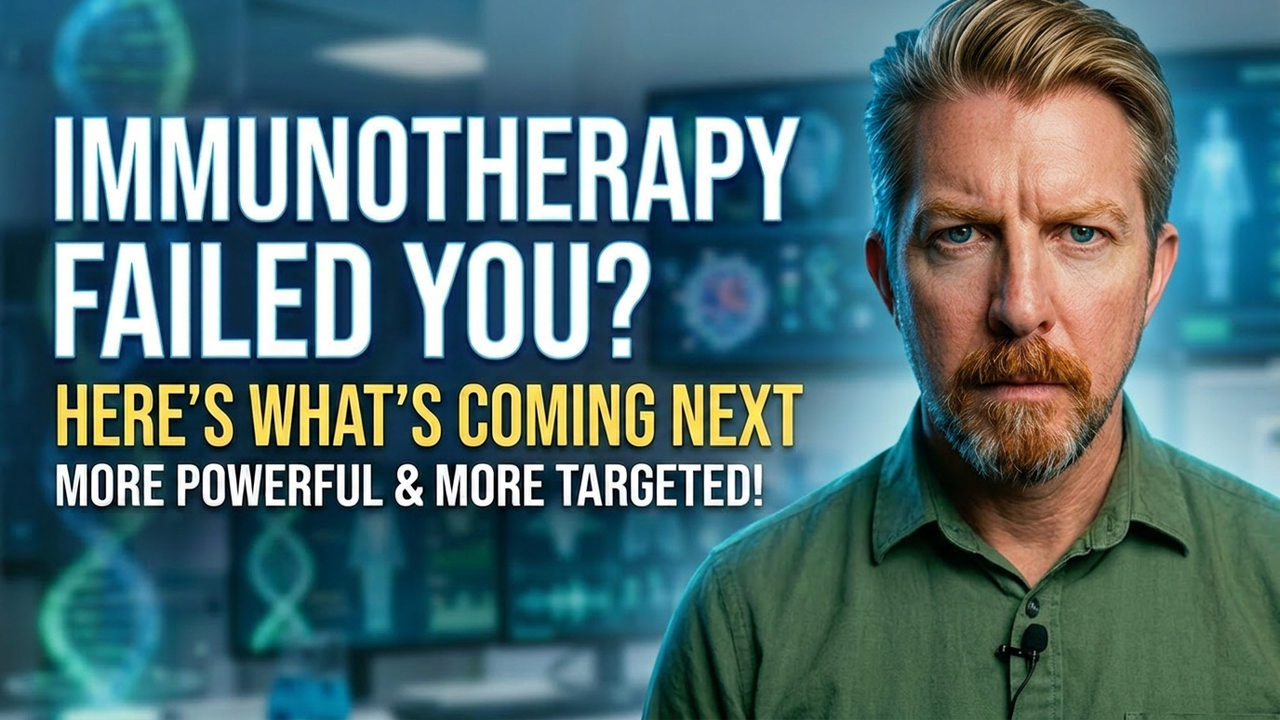
Why Immunotherapy Doesn’t Work for Everyone—And What Could Change That
Immunotherapy has changed oncology, offering new cancer treatment options for patients with melanoma, lung cancer, colorectal cancer, and more. Drugs like Keytruda, Anktiva, and IL-2 based therapies can create dramatic responses—but only for a subset of cancer patients. Understanding why immunotherapy works for some tumors and fails for others is one of the most important challenges in cancer research today, and the one that Dr. Chaplin is developing new drugs to treat.
Why Immunotherapy Works—And Why It Fails
The Promise of Immunotherapy in Cancer Treatment
Immunotherapy works by activating the immune system—particularly T cells or NK (Natural Killer) cells—to recognize and attack tumor cells. When it works, the results can be significant, even in metastatic disease.
Some patients with advanced cancer achieve complete responses, with no detectable disease. These outcomes are real—but they are not the norm.
The Reality: Limited Response Rates
Most current immunotherapy approaches work for roughly 20–40% of patients. For others, the tumor either does not respond or eventually becomes resistant.
Part of the challenge is that we lack reliable ways to predict who will benefit. Biomarkers like PD-L1 provide some guidance, but they are not highly predictive because that is not the only factor that matters.
The Missing Piece: Understanding the Tumor Microenvironment
Why the Tumor Environment Matters
Cancer is not just a mass of cells—it exists within a tumor microenvironment (TME) that can block immune activity.
In cancers like osteosarcoma, the TME may include:
- High levels of suppressive signals like TGF-beta
- Physical barriers that prevent immune cell access
- Dysfunctional or misdirected T cell activity
This creates what are often called “cold tumors”—tumors that the immune system cannot effectively attack.
Why One-Pathway Treatments Fall Short
Most current immunotherapies target a single pathway, such as PD-1/PD-L1 or CTLA-4. But cancer biology is much more complex.
If multiple suppressive mechanisms are active, blocking just one pathway may not be enough. We know this but forget about it: having the keys to your car isn't enough if it has no fuel and the tires have been removed.
Next-Generation Immunotherapy: A Multi-Target Approach
Combining Immune Activation and Targeting
Emerging approaches in immunology and drug discovery are focused on combining multiple mechanisms into a single therapy. This is what Dr. Chaplin is most excited about developing.
This includes technologies to:
- Block immune checkpoints (like current therapies)
- Specifically target tumors and spare normal tissue, reducing side effects
- Actively stimulate immune cells (similar to IL-2 or IL-15 pathways)
- Reprogram the tumor microenvironment for better and longer lasting immune responses for "cold" tumors
These strategies aim to both “release the brakes” and “press the gas” on the immune system at the same time. Dr. Chaplin's immunotherapies combine all four of these approaches.
What Is Dr. Chaplin Building Now?
Dr. Chaplin is currently advancing a next-generation tumor-focused immunotherapy platform designed to intervene precisely at the tumor–immune interface.
This multi-function construct aims to both neutralize immune suppression and stimulate targeted immune activation — addressing one of the central limitations of current checkpoint-based therapies.
This is the first program within a growing vision for parallel therapeutic innovation.
Why This Will Expand Who Benefits
By targeting multiple aspects of tumor biology, next-generation immunotherapy is likely to:
- Increase response rates across more cancer types
- Improve outcomes in resistant tumors
- Improve treatment efficacy and complete response rates
- Reduce unnecessary side effects through better targeting
What This Means for Cancer Patients
Immunotherapy is not a single tool—it’s a rapidly evolving field.
The key takeaway is this: success depends on matching the right immune strategy to the specific tumor environment.
Understanding how immunotherapy works—and why it fails—is essential to improving outcomes.
Accurate science saves lives — and it starts with rejecting simple myths in favor of real understanding. Stay curious.
Disclaimer: This content is for educational purposes only and is not medical advice. It does not replace guidance from your healthcare provider. Cancer and treatment decisions are highly individual—always consult your physician or qualified healthcare professional regarding your specific situation.
A full disclaimer is available Terms and Conditions.