

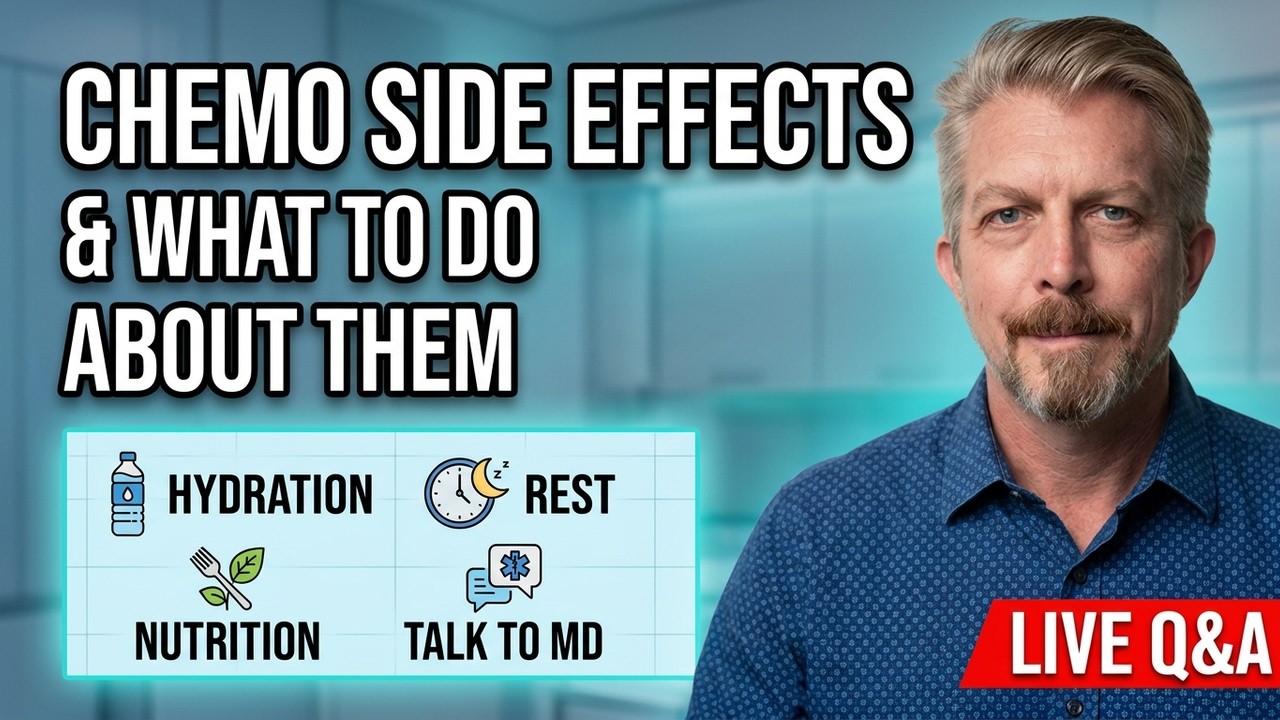
Less Discussed Chemotherapy Side Effects Every Cancer Patient Should Know
If you are a cancer patient going through chemotherapy — whether that's a FOLFOX regimen for colorectal cancer, a taxane for breast cancer, or a platinum-based protocol for lung cancer or pancreatic cancer — you've probably heard about nausea and hair loss. But there is a whole category of chemo side effects and cancer fatigue that almost never comes up in an oncology appointment. In this live Q&A, Cancer Drug Designer Dr. Chaplin covered the less discussed chemotherapy side effects that affect the vast majority of people on treatment, including chemo brain, taste and smell changes, sleep disruption, and joint pain — along with what alternative treatment approaches and supplements like apigenin and glutamine can actually do about each one.
Taste and Smell Changes: The Chemotherapy Side Effect Affecting 93% of Patients
Dysosmia — changes in smell and taste — happens to 93% of people on platinum-based chemotherapy. It makes eating difficult, reduces caloric intake, and affects your body's ability to maintain itself through treatment. Yet there is no formal guidance on it.
Two things have clinical evidence for preventing it: zinc lozenges held in the mouth during infusion, and ice chips — the same icing technique used for peripheral neuropathy in the hands and feet.
For day-to-day management, avoid mineral salts like Himalayan or pink salt. Those are pink because of iron and arsenic content, and under conditions of altered taste those metallic flavors get amplified and backfire. Use acid-based marinades instead — citrus or vinegar — to shift the flavor profile in a way that actually works. Switch from metal utensils and bowls to plastic and ceramic. And rotate your foods deliberately. If you keep eating your favorite comfort foods during treatment, you risk conditioning your brain to associate them with feeling unwell. Vary what you eat so you protect what you love.
Chemo Brain, Cancer Fatigue, and What Actually Helps
Cognitive difficulty — trouble finding words, concentrating, multitasking — happens across platinum drugs, tecan-class drugs (like irinotecan), taxanes, and many targeted therapies. It is not aging and it is not "in your head".
Electrolyte balance matters for both chemo brain and cancer fatigue: increase magnesium, sodium, and potassium. Magnesium glycinate is the best-absorbed form and the least likely to cause GI distress, at 200–400mg as a starting point.
The most consistently effective intervention for chemo brain is gentle aerobic exercise — not high intensity, just a walk. Small frequent meals help stabilize blood sugar and reduce cognitive load. Stress management and sleep quality are the other two levers, and they matter more than most people realize.
Cancer Nutrition, Fasting Chemotherapy Protocols, and the Trade-Off
Fasting chemotherapy approaches — including fasting mimicking diets — can meaningfully reduce chemo side effects by lowering blood sugar and slowing the activity of healthy cells during infusion. For FOLFOX and similar regimens, 12 hours before, the day of, and 12 hours after infusion are the target window.
The trade-off is real though: fasting also slightly slows tumor growth during treatment and because most classical chemotherapy drugs work during cell division this can slightly reduce treatment efficacy. If you are having a very easy time with side effects, you may not want to fast and should push toward efficacy. If side effects are difficult, fasting or a fasting mimicking diet is a strong tool for making it more tolerable.
One important cancer nutrition note: if you are losing weight or are resource-depleted, true fasting may not be right for you. In that case, fast with coffee and glutamine. Glutamine at 10 grams daily reduces wasting and supports tissue repair. Around infusion days for high-intensity regimens, increase that to 30–40 grams. Glutamine is not the same as glutathione — during platinum-based chemotherapy, high-dose glutathione and N-acetyl cysteine are not recommended, but glutamine is.
Melatonin, Sleep, Steroids, Apigenin and Theanine
Sleep problems during cancer treatment are often caused by something hiding in plain sight: steroids. Dexamethasone and other steroids in premeds and take-home pills can completely derail sleep architecture. If you are on steroids, ask your oncologist about a step-down dose reduction — from 10mg to 6mg, then lower — to find the minimum effective dose.
For getting to sleep, melatonin and magnesium both work well. For staying asleep — which is a distinct and different problem — two things stand out. Apigenin at 200mg before bed helps you stay asleep, reduces cortisol, and also makes platinum-class drugs, 5-FU / capecitabine and gemcitabine work better while reducing their side effects simultaneously. Theanine at 200mg lasts about four hours, quiets a racing brain without sedating you, and has no known interactions with chemotherapy agents or premeds. Keep it by your bedside — if you wake at 3am, take another dose and wait 15 minutes - you should be able to go back to sleep.
Taxane Joint Pain: A Real Chemo Side Effect with a Specific Fix
Taxane-associated arthralgia myalgia syndrome affects about 87% of people on paclitaxel, docetaxel, and Abraxane. It kicks in 24 to 48 hours after infusion, not during. Oncologists frequently dismiss it as aging or general malaise.
NSAIDs and Tylenol provide little relief. Gabapentin has good data for preventing taxane joint pain, but it must be started 24 to 48 hours before infusion — not on infusion day. It needs to be at full concentration in your system before the drug goes in.
One critical detail: taxane neuropathy responds to cold. Taxane joint pain gets worse with cold. Use heat for the joints. This distinction matters and most people are never told.
If you are also receiving pegfilgrastim shots to boost white cell counts, try to separate those from your taxane infusion day. Co-administering them significantly increases both the likelihood and intensity of joint pain.
Supplement Notes from Q&A
Curcumin and turmeric extract shut down T-cell function. If you are on any immune checkpoint inhibitor as part of your cancer treatment or immunotherapy protocol — Keytruda, Opdivo, or similar — do not take curcumin, resveratrol, or black seed oil at therapeutic doses at the same time. You cannot get the benefit of immunotherapy and curcumin simultaneously.
Sulforaphane and quercetin have very poor bioavailability in supplement form. Unless you are using a liposomal version, they are likely passing through without meaningful effect. Even with liposomal formulations the amount absorbed is questionable.
Accurate science saves lives — and it starts with rejecting simple myths in favor of real understanding. Stay curious.
Disclaimer: This content is for educational purposes only and is not medical advice. It does not replace guidance from your healthcare provider. Cancer and treatment decisions are highly individual—always consult your physician or qualified healthcare professional regarding your specific situation.
A full disclaimer is available Terms and Conditions.