
Why Vaccines Improve Immunotherapy Response in Cancer Treatment
Immunotherapy for cancer has transformed oncology, especially for metastatic cancer like melanoma, lung cancer, and colorectal cancer. Drugs like Keytruda work by releasing immune checkpoint “brakes” such as PD-1/PD-L1, LAG-3, and CTLA-4 so immune cells can attack tumors more effectively. But new cancer research presented at ESMO suggests something surprisingly simple may improve those responses even more: vaccination.
Optimal Immune Checkpoint Inhibitor treatment Needs More Than Just “Brake Removal”
Checkpoint inhibitors like Keytruda are designed to remove suppression from the immune system.
But removing the brakes does not automatically create an immune attack.
Your immune system still needs activation.
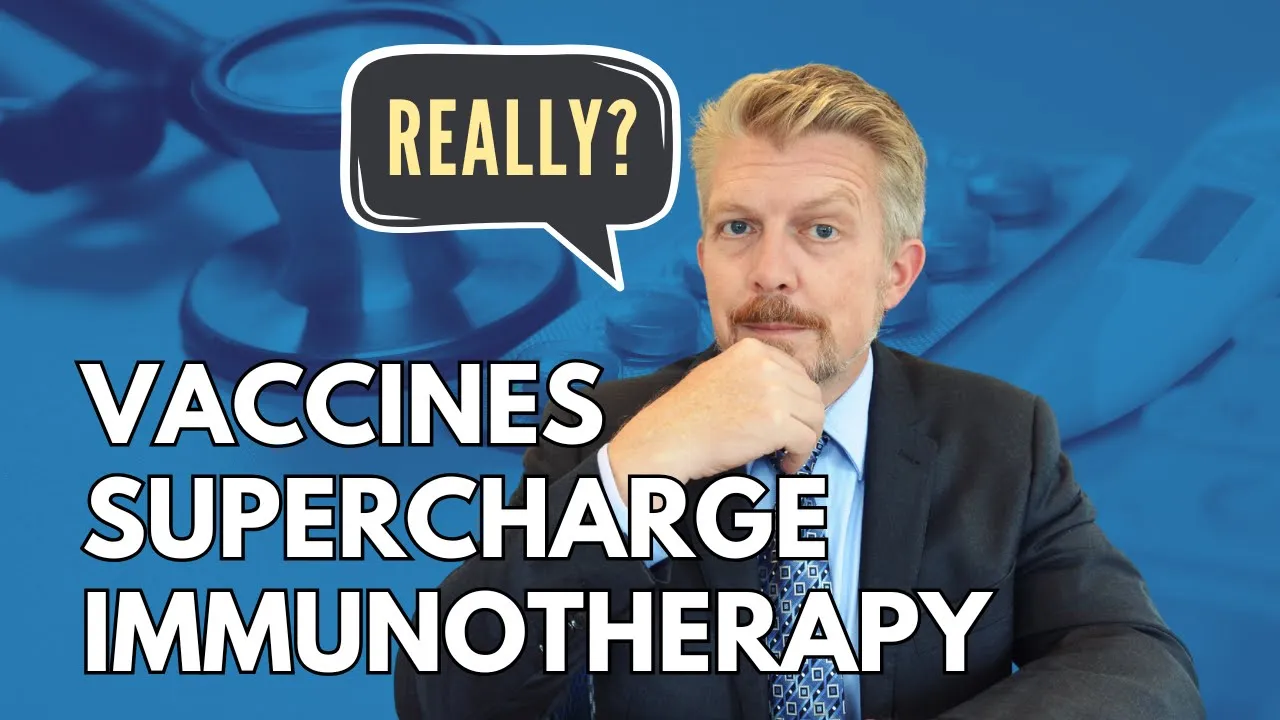
That activation is called inflammatory priming — the signal that tells immune cells something is wrong and worth attacking. This is why we repeatedly mention that "the immune system runs on inflammation" and that complete suppression of inflammation will always shut down your immune system. According to the research discussed at ESMO, COVID vaccination near the start of immune checkpoint inhibitor therapy appeared to significantly improve outcomes in cancer patients.
What the Cancer Research Showed
In non-small cell lung cancer, patients who received a COVID vaccine within 100 days of starting immunotherapy had a 49% reduction in mortality risk.
For metastatic melanoma, survival improved by 66%.
These findings were presented in connection with patients receiving immune checkpoint inhibitors targeting PD-1, PD-L1, and related pathways.
Importantly, the argument is not that the COVID vaccine specifically fights cancer.
The proposed mechanism is broader, and simpler, than that.
Vaccines stimulate inflammatory immune signaling, particularly interferon responses, which help “prime” the immune system while checkpoint inhibition removes immune suppression.
Why This Fits Basic Cancer Biology
From a cancer biology perspective, the concept is not new.
The idea that infections or immune activation can stimulate anti-tumor responses has existed for more than a century. This goes back to William Coley’s work in the 1890s in using bacteria to trigger immune activation in cancer patients, sometimes producing complete remissions. Even earlier observations from ancient Egyptian medicine noted occasional tumor regression after intentionally infecting open wounds to generate severe infections and fevers.
Modern immunotherapy simply gives a clearer mechanistic explanation for those observations.
Checkpoint inhibitors release immune suppression while vaccines provide the inflammatory “gas pedal” needed to drive a stronger anti-tumor response.
What Actually Matters Clinically
This does not mean every vaccine automatically improves every cancer therapy. Many live virus vaccines and virus-like particles should produce similar results, while protein vaccines in alum (like the Hepatitis vaccines or TDaP) will make far less of a difference.
The details matter.
Timing may matter. Cancer type may matter. Specific immune checkpoint pathways may matter.
The discussion focused specifically on vaccination near the start of checkpoint inhibitor therapy.
The broader point is that oncology increasingly depends on understanding how immune activation, inflammation, and tumor biology interact together.
Practical Takeaway for Cancer Patients
If you are preparing to start immunotherapy for cancer — especially PD-1, PD-L1, CTLA-4, or related checkpoint inhibitors — it may be worth discussing vaccination timing with your oncology team.
This is not alternative medicine or wellness culture.
It is basic immunology.
And understanding how to properly activate the immune system may become an increasingly important part of cancer therapy moving forward.
Accurate science saves lives — and it starts with rejecting simple myths in favor of real understanding. Stay curious.
Disclaimer: This content is for educational purposes only and is not medical advice. It does not replace guidance from your healthcare provider. Cancer and treatment decisions are highly individual—always consult your physician or qualified healthcare professional regarding your specific situation.
A full disclaimer is available Terms and Conditions.