
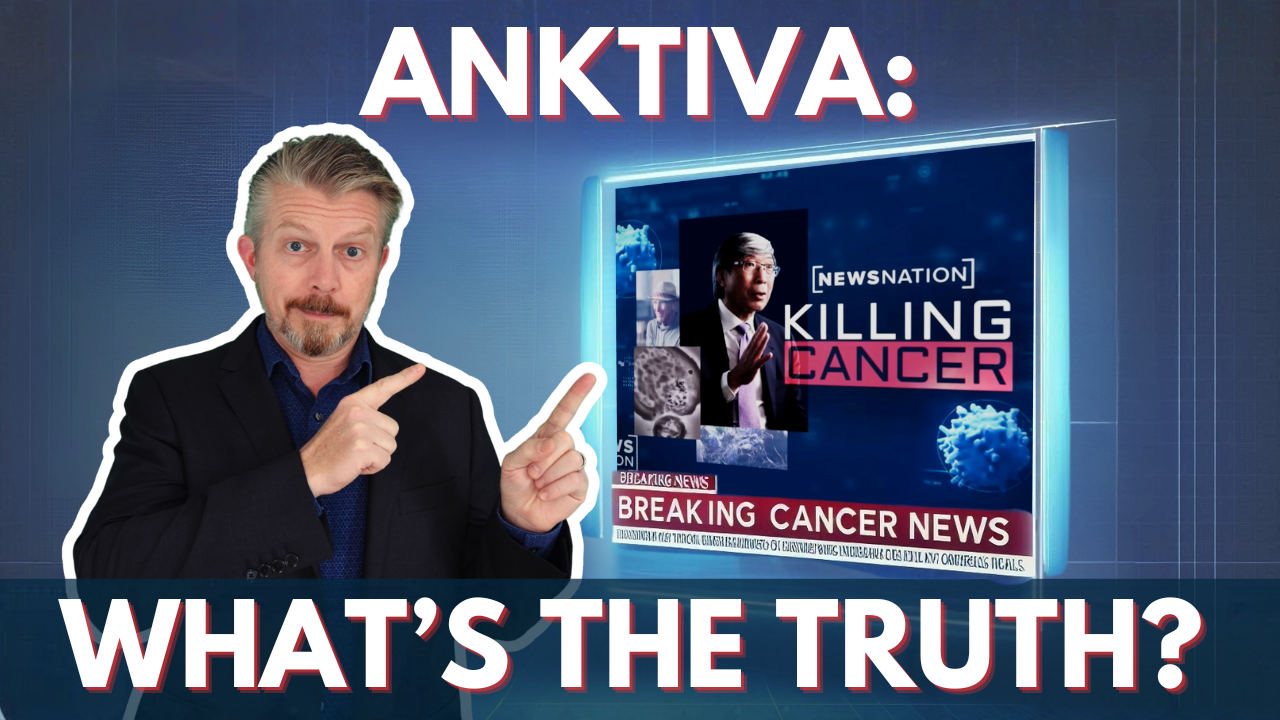

Link to the video is here: Anktiva: Did The FDA Block A Life Saving Cure?
ANKTIVA: Did the FDA Block a Life-Saving Cure? Let’s Fact-Check the Hype
A so-called “miracle cancer drug” named Anktiva is trending across social media and cancer news, with claims that the FDA is blocking access and that only political intervention can save it. That story may be compelling — but it’s not true. To understand what’s really happening in cancer immunotherapy, we need to separate evidence from emotion.
What Anktiva Actually Is — and What It Isn’t
Anktiva is an immunotherapy for cancer designed to stimulate natural killer (NK) cells, a key part of the immune system. This approach isn’t new. Decades ago, drugs like interleukin-2 were approved to activate NK cells in certain cancers. In that sense, Anktiva is scientifically legitimate and potentially very valuable by providing a different approach for immunotherapy.
However, today Anktiva is FDA-approved for only one cancer: bladder cancer, and only in combination with BCG therapy. There is currently no validated evidence that Anktiva works as a standalone cancer treatment immunotherapy for other cancers such as lung cancer, breast cancer, colon cancer, colorectal cancer, or brain cancer (GBM).
That distinction matters.
The Real Barrier Isn’t the FDA — It’s Evidence
Despite claims on Social Media, Anktiva is already FDA approved and legally accessible in the U.S. Physicians can prescribe it off-label for other cancers if they choose. The real issue is that insurance companies will not pay for a treatment that lacks clinical proof of benefit.
Each dose of Anktiva costs $35,800 for the drug alone, with treatment plans ranging from 6 to 36 doses — potentially exceeding $1.3 million per patient. Without rigorous trials demonstrating effectiveness in specific tumors, insurers have no justification to cover it. This is not regulatory obstruction; it’s standard evidence-based medicine.
Why “Approved for One Cancer” Doesn’t Mean “Works for All”
Every tumor is biologically different, just like every person is different. A therapy that helps bladder cancer does not automatically help ovarian cancer, NSCLC, or non-Hodgkin’s lymphoma. That’s why companies like Merck spent billions running trials and developing companion diagnostics for drugs like Keytruda — proving which patients benefit and why.
Claiming that one approval should apply to all cancers ignores decades of oncology research and puts cancer patients at risk of false hope and financial harm. No drug has ever worked on every cancer.
The Science: NK Cells vs. Durable Cancer Control
NK-cell therapies like Anktiva can trigger rapid tumor shrinkage which is fantastic for immediate relief, but NK cells do not form immune memory. Once the drug stops, NK activity returns to baseline. In contrast, T-cell–based therapies can generate long-term immune surveillance — sometimes producing durable remissions.
This doesn’t make Anktiva “bad.” It makes it specific — and best used when guided by biomarkers and combined appropriately with other treatments.
The Bottom Line
Anktiva is not being blocked. It is unproven beyond its approved use. Blaming regulators distracts from the real solution: completing trials, developing diagnostics, and matching the right therapy to the right cancer.
If someone claims a single drug can cure all cancers — without evidence — that’s your cue to ask harder questions.
Disclaimer: This content is for educational purposes only and is not medical advice. It does not replace guidance from your healthcare provider. Cancer and treatment decisions are highly individual—always consult your physician or qualified healthcare professional regarding your specific situation.
A full disclaimer is available Terms and Conditions.