

Breast Cancer Treatment Is Changing—But the Details Matter
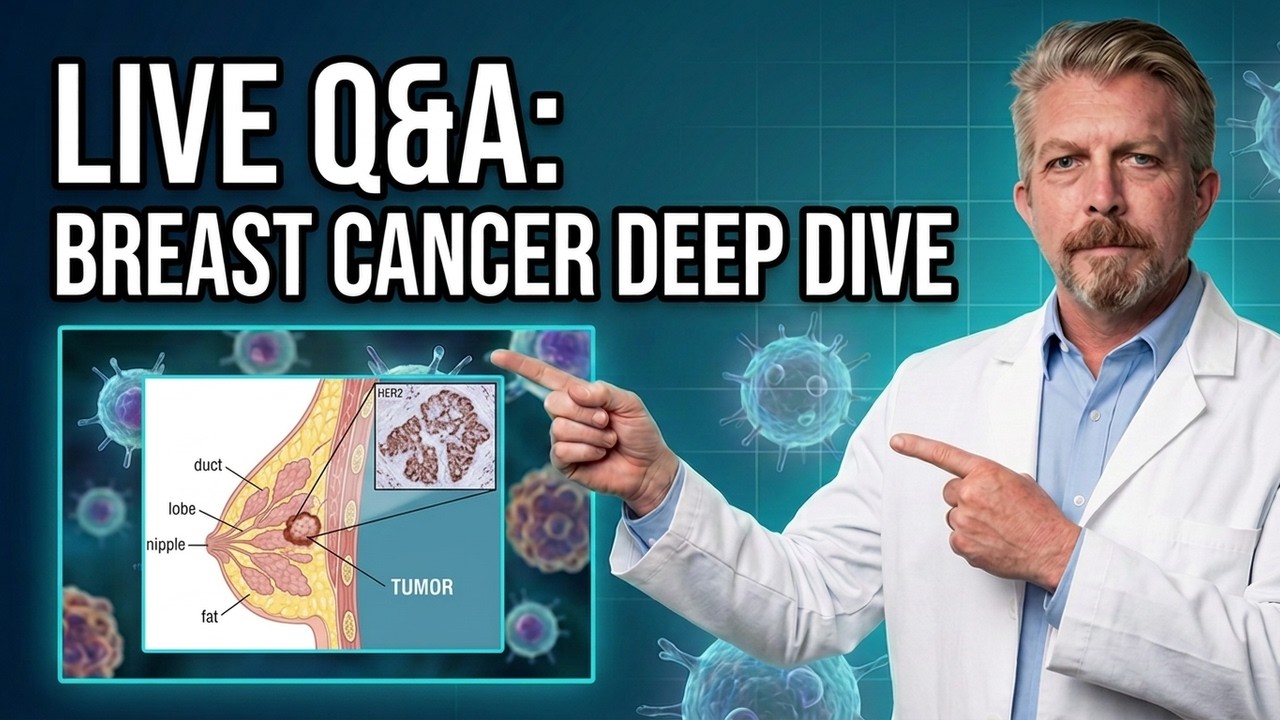
If you are navigating breast cancer, it can be difficult to keep up with how quickly breast cancer treatment is changing. New estrogen-blocking drugs, antibody-drug conjugates, targeted therapy, and evolving approaches to radiation therapy are changing the options available to some patients. In this Elevating Cancer Treatment live cancer Q&A, the central message is that breast cancer is not one disease. Your cancer’s subtype, biomarkers, genomics, and treatment history can all affect what makes sense next.
What Is Breast Cancer? The Answer Is More Complicated Than You Might Think
One of the biggest problems in breast cancer care is treating the diagnosis as if it tells you everything you need to know.
The discussion highlighted important differences between estrogen receptor-positive disease, HER2-positive disease, HER2-low disease, lobular breast cancer, invasive ductal breast cancer, and inflammatory breast cancer. These cancers can behave differently and respond differently to medications.
That is why patient education matters. Knowing whether a tumor is hormone receptor-positive, HER2-positive or negative, and what other biomarkers are present can change the treatment conversation.
Breast Cancer Treatment Is Becoming More Targeted
New drugs in the estrogen-blocking and estrogen-receptor-degrading family are becoming available, while antibody-drug conjugates are also changing how some HER2-related cancers are treated.
For people with hormone receptor-positive, HER2-negative breast cancer, estrogen receptor mutations such as ESR1 can become particularly important. The discussion described newer estrogen receptor degraders as an option when these mutations emerge.
The broader point is not that every new cancer drug is right for every patient. It is that testing can help identify when the biology of a cancer has changed enough to make a different treatment relevant.
Why Genomics Matter in Breast Cancer
A standard genomic test can be useful for answering specific questions, such as estimating recurrence risk and the potential value of chemotherapy. But the discussion also pointed out a limitation: standard panels focus on mutations commonly associated with breast cancer.
Cancer does not always follow those boundaries.
Broader genomic testing may become more useful when there is uncertainty about what treatment should come next. Unusual mutations can sometimes affect sensitivity to particular cancer drugs, including chemotherapy.
For a patient whose disease is changing or becoming harder to treat, the question is not simply whether genetic testing was done. It is whether the testing being used is capable of finding the information that could actually change the treatment decision.
Radiation Therapy: More Is Not Automatically Better
Radiation therapy was another major focus of the discussion.
The live episode described a study examining patients who had surgery and systemic treatment, with some also receiving radiation to the chest wall. In that particular setting, the radiation did not add a benefit while it did add side effects.
That does not mean radiation therapy is unhelpful. Quite the opposite: the discussion described radiation as a powerful tool when there is a defined target.
The distinction is between targeting a known tumor and irradiating a larger area when there is nothing specific to target. Radiation is particularly valuable when it can precisely treat an identifiable tumor.
Chemotherapy Side Effects Deserve Serious Attention
Chemotherapy remains an important part of cancer care, but the discussion emphasized that side effects are not simply an inconvenience.
Taxane chemotherapy, for example, can cause neuropathy and other problems that may build gradually. The live discussion also stressed the importance of monitoring blood counts and liver-related laboratory results during treatment.
This is where communication with your cancer doctor becomes especially important. A treatment plan has to balance controlling cancer with keeping you well enough to continue treatment safely.
Triple Negative Breast Cancer and Immunotherapy Need Their Own Context
Triple negative breast cancer (TNBC) is another reminder that breast cancer treatment cannot be reduced to one standard approach.
The transcript discussed chemotherapy, immunotherapy such as Keytruda, and the importance of understanding the biology of an individual tumor. It also returned repeatedly to the value of biomarkers when deciding what treatment comes next.
The same principle applies when thinking about metastasis. A metastatic breast cancer diagnosis does not erase the importance of understanding what the tumor is expressing or which mutations it carries. Those details can influence which targeted therapy or other treatment options are worth discussing.
The Practical Takeaway for Breast Cancer Care
If you are dealing with breast cancer, the most useful question is not simply, “What is the newest treatment?”
A better question is: “What does my cancer’s biology tell us about what comes next?”
That means understanding your biomarkers, knowing what your genomic testing does and does not examine, asking how a proposed treatment fits your specific subtype, and discussing both benefits and side effects with your oncology team.
Breast cancer treatment is changing quickly. The most important part of that progress is not having more options for their own sake. It is having better information to determine which options actually fit the cancer in front of you.
Accurate science saves lives — and it starts with rejecting simple myths in favor of real understanding. Stay curious.
Disclaimer: This content is for educational purposes only and is not medical advice. It does not replace guidance from your healthcare provider. Cancer and treatment decisions are highly individual—always consult your physician or qualified healthcare professional regarding your specific situation.
A full disclaimer is available Terms and Conditions.