

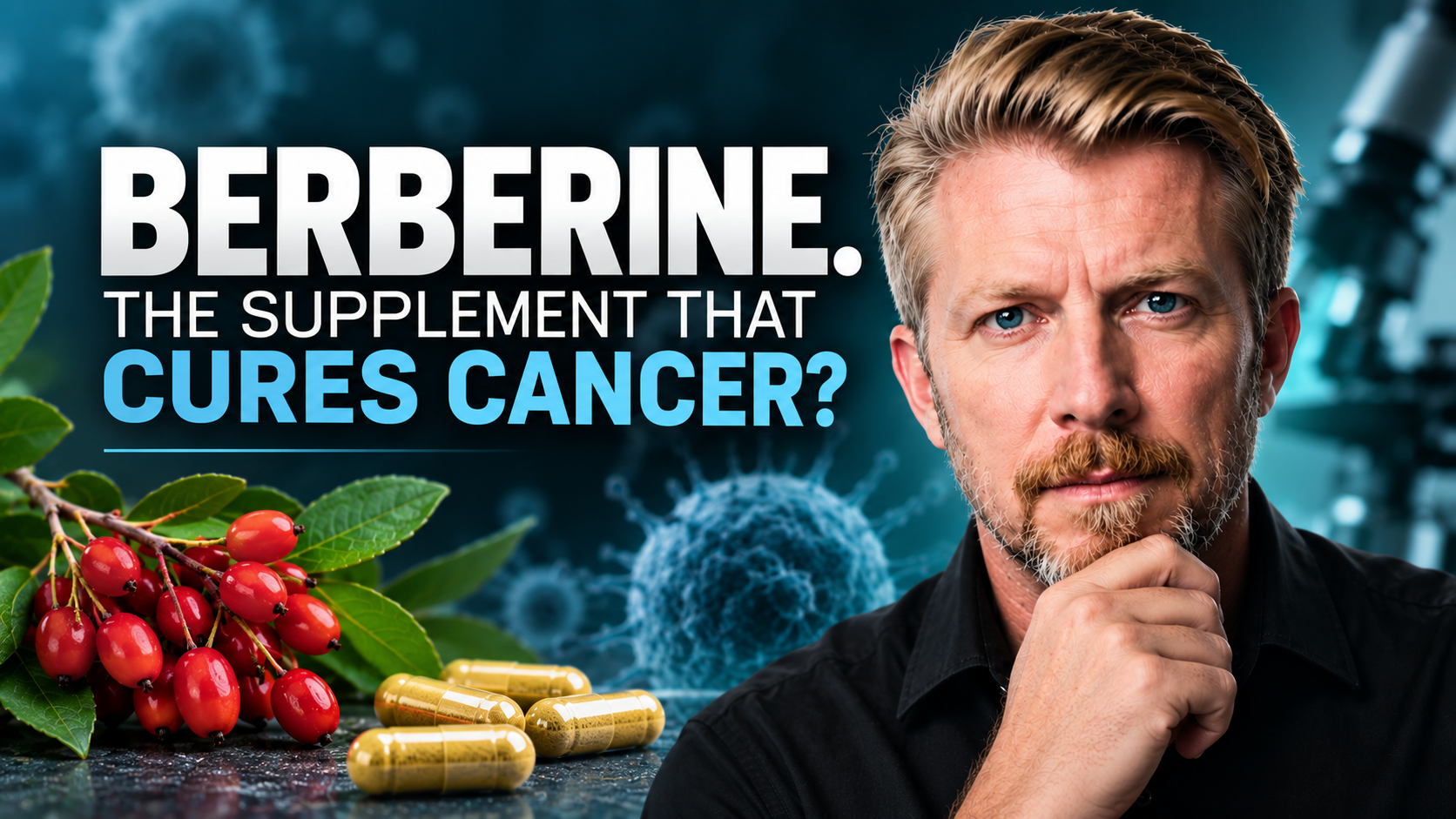
Berberine and Cancer: What "Nature's Ozempic" Actually Does (Part 1)
Berberine has become one of the most talked-about supplements online — called "Nature's Ozempic" for its metabolic effects, and credited by some corners of the internet with everything from fixing cholesterol to curing cancer. Some of that reputation is genuinely earned. Some of it isn't. Here's what the actual clinical trial data says berberine does, what the cancer claims get wrong, and the one real cancer win this compound has — plus why it only works in one specific place in the body.
Where berberine's evidence is real
For metabolic health, berberine holds up. A meta-analysis of 37 randomized clinical trials with over 3,000 patients found it meaningfully lowered fasting glucose and HbA1c, roughly in the range of an older diabetes medication. Separate trials showed improvements in cholesterol and liver fat. This is berberine's legitimate home turf, and blood sugar control does affect cancer progression rates in most tumor types.
Why the cancer claims (Mostly) fall apart
This is where the pharmacology gets interesting. In lab studies, berberine reliably kills cancer cells — but only at concentrations of roughly 10 to 100 micromolar. In actual human clinical trials, people taking high oral doses for months reach blood levels of about 0.02 micromolar. That's a gap of a thousand to ten-thousand fold. Berberine's oral bioavailability is under 1%, and most of what does get absorbed is broken down by the liver immediately - before it ever reaches circulation. A compound can be a genuine lab superstar and still be biologically incapable of reaching a cancer-killing dose in a person — those are two separate claims, not one.
The one place it actually works
There's an exception, and it's instructive. A large randomized clinical trial published in the Lancet followed over 1,100 patients after colon polyp removal and found berberine reduced polyp recurrence significantly. The reason: berberine is barely absorbed, so nearly all of it stays in the colon at high concentration. It's the one place in the body where the dose problem doesn't apply — which is exactly why it's the one place berberine has real cancer evidence behind it.
What this means for supplement claims generally
The same "dose in the dish versus dose in a human" gap applies to curcumin, quercitin, sulphoraphane, and most other supplements marketed for cancer. A published lab study is not the same as a working human dose. Before trusting any cancer claim about a supplement, it's worth asking: what dose actually worked, does that dose reach the bloodstream in a person, and has it been tested in actual clinical trials — not just cell lines.
What's next
Part 2 covers what matters most for anyone already in cancer treatment: berberine's drug interactions, including immunotherapy, and where this "harmless" supplement can actively interfere with chemo or targeted therapy. If you're taking berberine or considering it alongside cancer treatment, that's the episode to watch before making any decisions.
Accurate science saves lives — and it starts with rejecting simple myths in favor of real understanding. Stay curious.
Accurate science saves lives — and it starts with rejecting simple myths in favor of real understanding. Stay curious.
Disclaimer: This content is for educational purposes only and is not medical advice. It does not replace guidance from your healthcare provider. Cancer and treatment decisions are highly individual—always consult your physician or qualified healthcare professional regarding your specific situation.
A full disclaimer is available Terms and Conditions.