
What Cancer Patients Ask About Supplements, Genomics & Chemo Side Effects
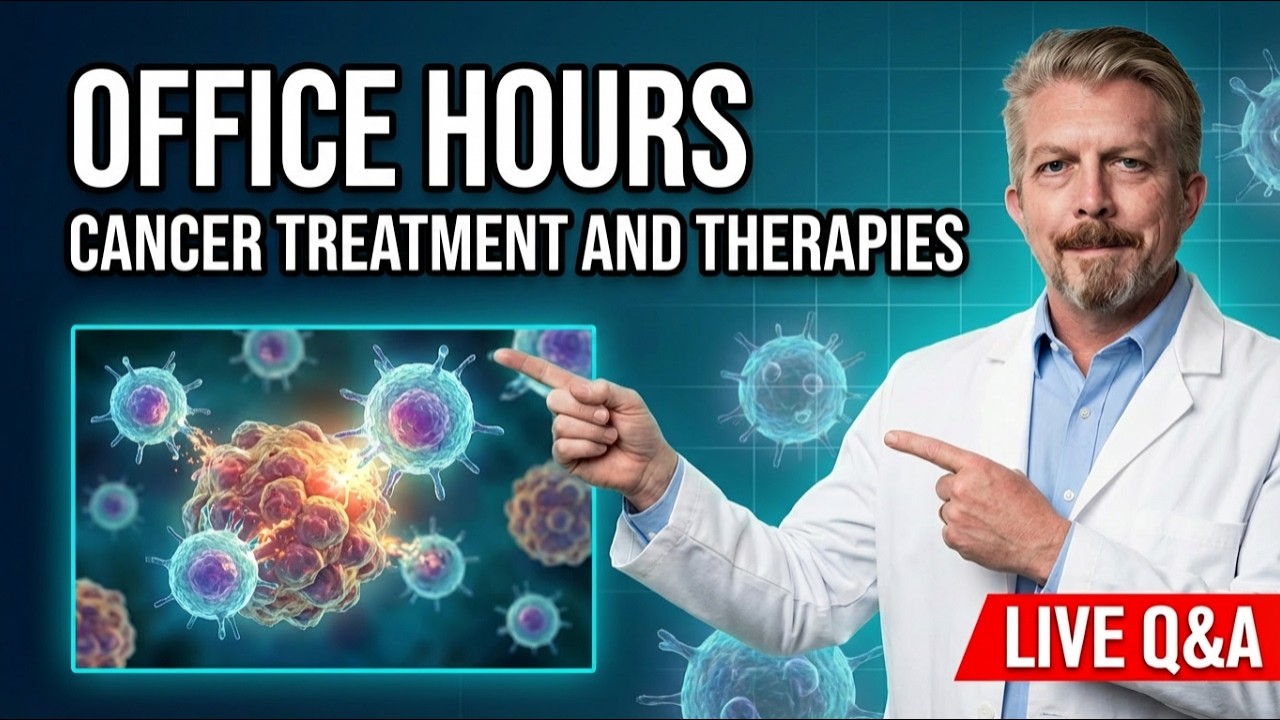
If you are navigating cancer treatment, you are probably drowning in conflicting information about supplements, chemotherapy side effects, and what actually works. In a recent live Q&A, Dr. Chaplin fielded questions covering everything from melatonin and vitamin K2 to glutamine, kinase inhibitors, cancer stem cells, and genomics testing. Here is what the science — and the clinical data — actually shows.
High Dose Melatonin and Vitamin K2: Powerful Tools That Should Not Be Combined
You may have heard that both melatonin and vitamin K2 can help with cancer in very high doses. Both are true — but taking them together significantly reduces the benefit of each.
Vitamin K2 works by saturating the inner membrane of the mitochondria, wasting some of the electron flow used to generate cellular energy. Cancer cells need every bit of energy they can produce to keep growing. When that energy production is disrupted, cancer cells can be pushed into a stress state that causes them to die. The same principle applies to high-dose melatonin — in the range of 40 to 100 milligrams per day — which interferes with energy production through a different mitochondrial pathway.
The problem is that these two pathways interact and partially cancel each other out. Taking both at the same time means neither one stresses the cancer cell as effectively as it should. The solution is simple: take them separately. Use vitamin K2 for a two-week cycle, take a two-week break, and use that break period for high-dose melatonin.
Natural Kinase Inhibitors: The Doses Most People Never Take
Curcumin, resveratrol, and EGCG from green tea all inhibit cancer-relevant kinase pathways. They work — but almost never at the doses people are actually taking.
Curcumin requires at least six grams per day to have a meaningful cancer effect. Resveratrol requires at least 500 milligrams per day — not the 20 or 50 milligrams found in most supplements. EGCG requires at least 1.2 grams per day and is optimal at 1.6, which is close to the upper limit of what many people can tolerate without GI distress. Quercetin, despite looking promising in cell studies, does not exit the gut into the bloodstream in any meaningful amount when taken orally — it would need to be given by IV to have any clinical effect.
These compounds are not ineffective. They are just consistently under-dosed. If you are using them, check your actual dose against these numbers.
Glutamine Does Not Feed Cancer — And It Can Protect You During Chemo
This is one of the most persistent misconceptions in cancer nutrition, and it is causing real harm to patients who restrict it.
The idea that glutamine feeds cancer comes entirely from cell line studies — cancer cells that have been adapted to laboratory conditions for decades. When researchers used tracers in actual cancer patients to track where tumors were getting their building materials, the raw material consistently came from sugar, not glutamine. Cancer in the human body does not appreciably use glutamine. Most cancers actually produce and export more glutamine than they consume.
Meanwhile, glutamine is critical for your fastest-dividing healthy cells — your intestinal lining, hair follicles, and immune system. Supplementing with 10 to 40 grams per day during chemotherapy has consistently been shown in clinical trials to reduce nausea, diarrhea, hair loss, and the cardiac side effects of doxorubicin, without reducing chemo efficacy or interacting with any cancer drugs. In patients not on any treatment, it improved overall survival. Restricting glutamine does not slow your cancer. It weakens you.
Genomics Testing: What Over-interpretation Looks Like
Not all cancer genomics or biomarker tests are equal. Some tests — like Tempus, Foundation One, Caris, and MSK Impact — report mutations clearly and leave interpretation to you and your medical team. Others claim to predict which drugs are 50% or 80% likely to work for your specific cancer, with a clean interface that makes those numbers look authoritative.
The problem is the math behind those claims rarely holds up. Isolating circulating tumor cells from blood, culturing them with drugs, and generating that level of predictive data would require far more blood than a human body contains. If a test cannot explain exactly how it arrives at its conclusions, treat the results with caution. The tests that under-interpret and give you raw data are often the more trustworthy starting point — and finding the clinical significance buried in that data is where individualized guidance makes the real difference.
Practical Takeaway: Details and Timing Are Everything
High-dose melatonin and vitamin K2 are both valuable — just not simultaneously. Natural kinase inhibitors require therapeutic doses to do anything. Glutamine is safe, non-interactive with any cancer drug, and clinically beneficial during treatment. And genomic testing is only as useful as the interpretation behind it. The pattern across all of these is the same: the headline is rarely the whole story.
Accurate science saves lives — and it starts with rejecting simple myths in favor of real understanding. Stay curious.
Disclaimer: This content is for educational purposes only and is not medical advice. It does not replace guidance from your healthcare provider. Cancer and treatment decisions are highly individual—always consult your physician or qualified healthcare professional regarding your specific situation.
A full disclaimer is available Terms and Conditions.