
Can a Cancer Diet Actually Slow Tumor Growth? What the Science Shows
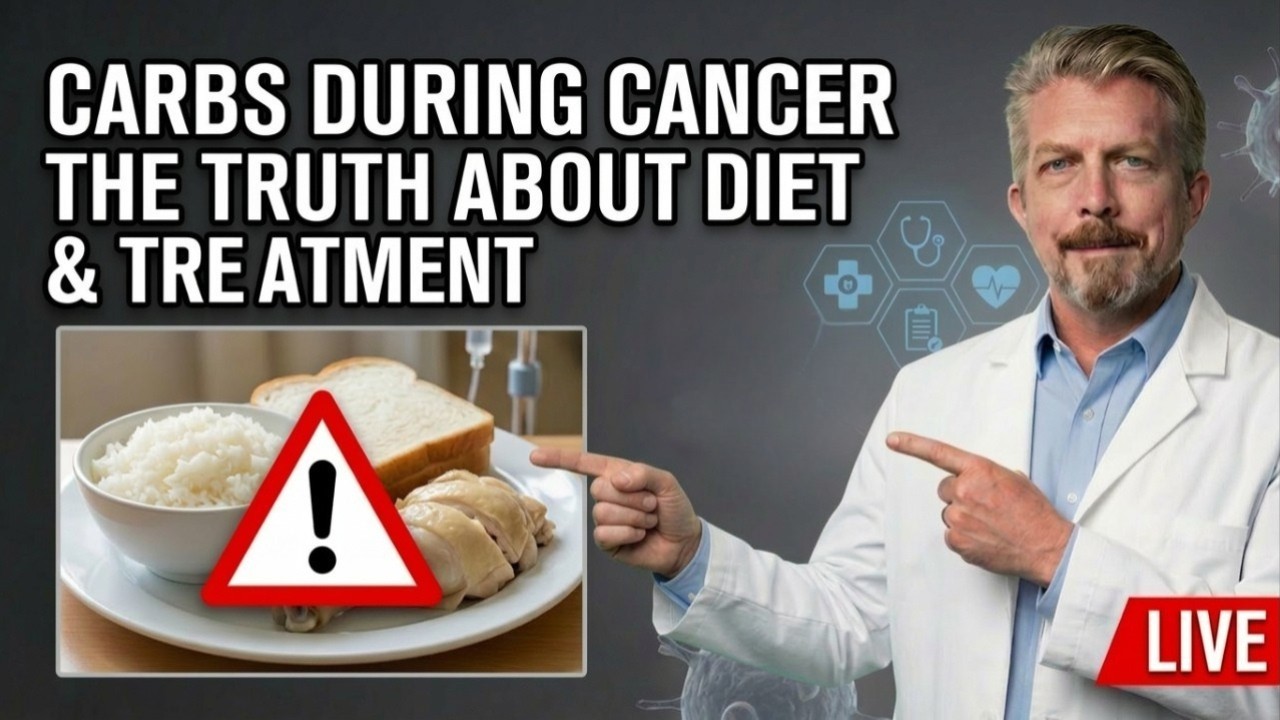
If you have cancer, you've probably been told that sugar feeds cancer, that a keto diet can starve it, or that glutamine is dangerous. These ideas are everywhere — on forums, in books, across social media promoting cancer fighting foods and diet and cancer protocols. Some contain a grain of truth. Most are missing the part that actually matters. Here's what the clinical data shows about cancer diet, low carb eating, keto, sugar, and glutamine — pulled directly from the science, not from cell line studies or internet forums.
Sugar Feeds Cancer Growth — But Starving Cancer Is a Myth
You've heard that sugar feeds cancer. That part is true. Cancer cells are your own cells — they haven't become something foreign. They've simply lost the ability to stop growing. And because they're growing as fast as possible, they prefer sugar over everything else — not because it's the most efficient fuel, but because it's the fastest available building block. That's exactly why PET scans use labeled sugar: cancer lights up because it pulls glucose in so aggressively.
But here's what most cancer diet advice gets wrong: you cannot starve cancer by cutting sugar entirely. Cancer cells use the exact same mechanisms as your normal healthy cells to absorb nutrients from the bloodstream. They just have more of those receptors. If you could cut off fuel to the cancer, you would cut it off to your healthy cells first — they use the same machinery, they just have less of it. Normal healthy cells would die before the cancer does.
What carb restriction does is slow growth rate, not eliminate cancer. Cancer cells, given no sugar, will adapt to ketones and fats within about a day and a half to two days. They'll keep growing — just more slowly. That distinction matters enormously when you're making real treatment decisions. Slowing down growth is useful but it isn't the same as killing the cancer.
Keto Diet and Cancer: The Numbers That Actually Matter
The clinical data on keto diet, carnivore diet, low carb plant-based diets, in the cancer setting all keep pointing to the same two numbers — and it doesn't really matter which dietary approach you use to get there.
At or below 50 grams of net carbs per day — all carbohydrates except dietary fiber — you begin to meaningfully slow cancer progression. At or below 30 grams per day is where the maximal effect occurs. Going lower than 30 grams per day adds little additional benefit. The sweet spot is 30 to 50 grams, and that's where the data is consistent.
Whether you achieve that through a ketogenic diet, a carnivore diet, or a properly structured raw vegan approach doesn't appear to matter much. Hundreds of small university-initiated studies, when pooled together in meta-analyses, show roughly equivalent results across those different approaches. What matters is the carb level — specifically net carbs — not the label on the diet. If keto works for you and you can sustain it, great. If carnivore or plant-based low carb works better for your preferences and your biochemistry, that's equally valid. Sustainability matters because this isn't a short-term fix. That is important to keep in mind with the other sugar restriction approach - fasting. Fasting around chemotherapy infusions has significant benefits, but it isn't sustainable for your body's energy needs while fighting cancer.
It's also worth knowing that your liver will always produce some glucose regardless of what you eat. Complete carb elimination isn't possible, and it isn't necessary. Even in full nutritional ketosis, there is always sugar in your bloodstream. The goal is lowering the average level in a way you can maintain — not achieving zero.
If you want to know whether your diet is actually working, monitoring your A1C or using a continuous glucose monitor gives you real data. And be aware that if your chemotherapy includes steroids, those will drive your liver to produce glucose regardless of your diet — which is one more reason to have a conversation about steroid dose reduction with your oncologist when it's appropriate.
Glutamine Does Not Feed Cancer in the Human Body
This is one of the most damaging misconceptions in the cancer diet conversation, and it's causing real harm.
It is true that cancer cell lines in a laboratory dish are often glutamine-dependent. Withhold glutamine in culture, and many cancer cell lines die. That data is real. But those cell lines have been adapted to growing in laboratory conditions for decades — in some cases 70 years. Their metabolism has changed significantly from what happens inside an actual human body, and that distinction is critical.
When researchers administered tracers to actual cancer patients — tracking where the raw building materials for tumor growth were actually coming from — the results were consistent: it came from sugar, not from glutamine or protein. Cancer in the human body is sugar-focused. The glutamine addiction seen in cell lines does not reflect human cancer metabolism. It is a lab artifact from cell culture and not a feature of cancer itself.
Meanwhile, glutamine is essential for the fast-dividing healthy cells that chemotherapy damages most: your intestinal lining, your hair follicles, and your immune system (when it's active). The entire lining of your GI tract replaces itself every three days. When chemotherapy hits those cells, your gut becomes, effectively, a large open wound that needs to heal. Supplementing with 10 to 40 grams of glutamine per day during chemotherapy has been shown in clinical trials to reduce nausea, diarrhea, hair loss, and the cardiac side effects of drugs like doxorubicin — without reducing treatment efficacy and without interacting with any cancer drugs or immunotherapies.
In patients not undergoing any treatment at all, glutamine supplementation was shown to extend life — not shorten it. Glutamine supplementation has also been shown to reduce cachexia (cancer wasting) and maintain a higher quality of life. The fear of glutamine, based on cell line data from Thomas Seyfried, Casey Peavler, and others, is an artifact of how those studies were conducted. It does not reflect clinical reality.
Fasting Before Chemo, B12, and the Details That Change Outcomes
Two more pieces from the clinical data that don't get enough attention.
For traditional chemotherapy, fasting for one to two days before and on the day of your infusion can meaningfully reduce side effects. The mechanism is straightforward: fast-dividing healthy cells — your gut lining, hair follicles, immune cells — prefer sugar the exact same way that cancerr does. They just take the option of adapting while cancer ignores the need to slow down and conserve energy. Fasting quiets them down to their minimum growth rate. Chemotherapy then hits cancer cells, which keep growing regardless, while causing less collateral damage to those quieted healthy tissues. For immunotherapies like Keytruda, fasting is less useful — your immune system needs to be well-resourced and active. A better approach with checkpoint inhibitors is short-term mild immune modulation, such as high-dose vitamin D3 or curcumin before and on the day of infusion.
On B12: dietary B12 from food is not a significant concern. The problem is high-dose supplemental B12, which is extremely common in multivitamins and B-complex products. Clinical data shows that cancer patients who supplemented with high-dose B12 during treatment had double the rate of treatment failure, recurrence, or death. B12 encourages cancer cell growth and protects cancer cells from being killed by chemotherapy and targeted therapies. Keeping supplemental B12 at or below 250% of the RDI appears safe. Many common supplements contain 600% to 40,000% of the RDI. During any cancer treatment, check your labels carefully.
Practical Takeaway: The Numbers Exist, and They Matter
Aiming for 30 to 50 grams of net carbs per day is a meaningful, evidence-based target. Glutamine supplementation at 10 to 40 grams per day is safe, non-interactive with any cancer drugs, and clinically beneficial. Fasting before chemotherapy infusions — but not immunotherapy — can reduce collateral damage to healthy tissue. And high-dose B12 supplements are worth reviewing carefully.
None of this is one-size-fits-all. But the numbers are real, the mechanisms are understood, and the clinical data exists. General internet advice about cancer fighting foods and starving cancer almost always skips these details. That's exactly where the difference lies.
Accurate science saves lives — and it starts with rejecting simple myths in favor of real understanding. Stay curious.
Disclaimer: This content is for educational purposes only and is not medical advice. It does not replace guidance from your healthcare provider. Cancer and treatment decisions are highly individual—always consult your physician or qualified healthcare professional regarding your specific situation.
A full disclaimer is available Terms and Conditions.